Research
To support my hypotheses and gather data, I used both primary and secondary research methods to explore the challenges faced by rural women caring for elderly relatives. A key finding was that they do not see themselves as carers but rather view these tasks as a duty. This research led to identifying four key pain points, offering deeper insights and potential solutions.
These pain points were the following:
- Isolation is a big problem in rural area.
- There is no one to talk to about frustration.
- Sensitive topics.
- These people have no proper training in nursing care.
- Managing someone else's life.
- Knowing that it's the last chapter in your loved one's life.
- Dealing with early grief.
- Doctor's visit and medication.
- Constant need for planning and administration.
Although there are various software solutions for task management and optimization, as well as resources for self-care and mental well-being, there is no digital product specifically designed to support home caregivers for the elderly and address their unique needs.
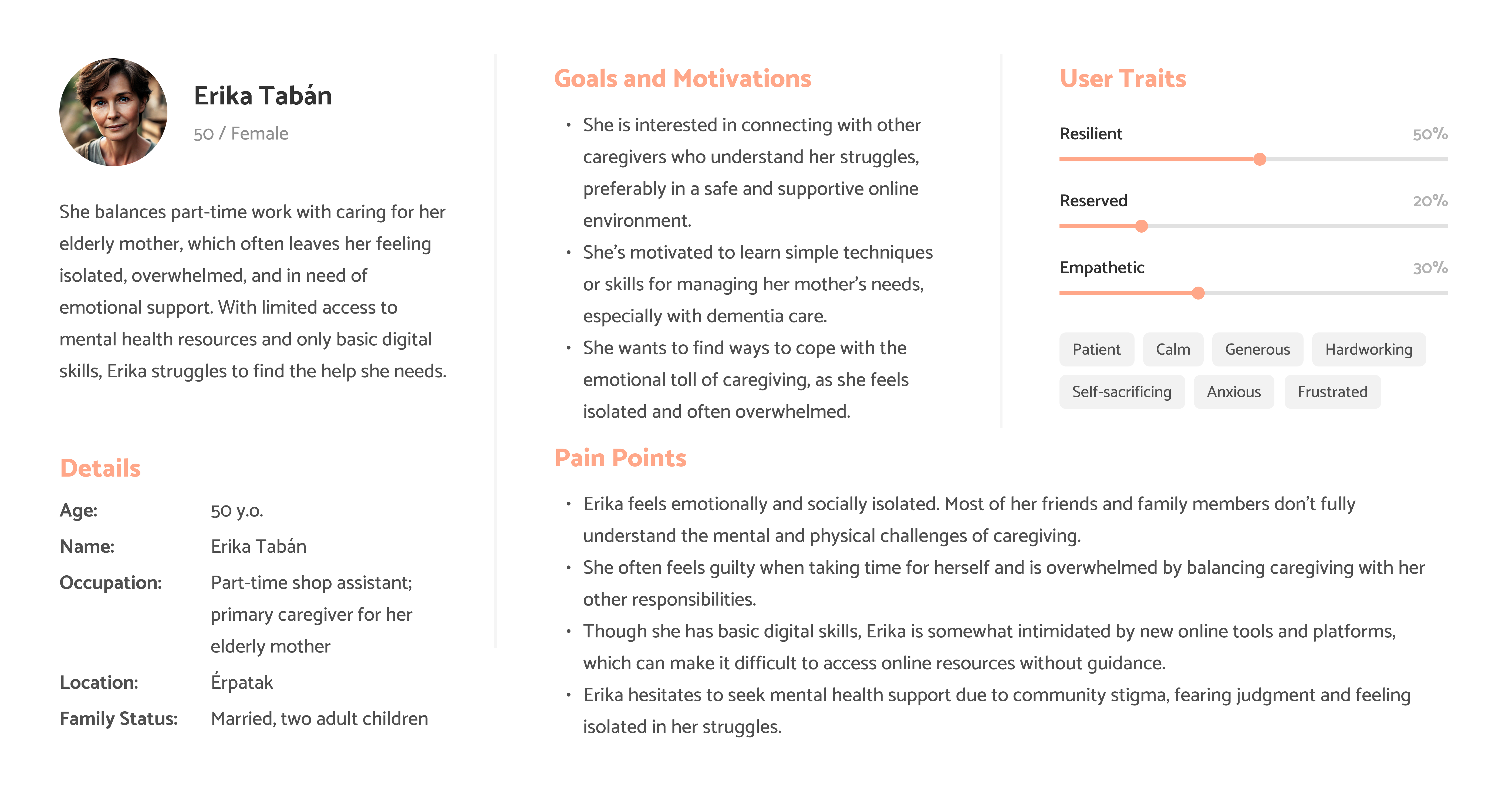
Persona:
To get a better understanding of the real users and to see them actually using the product, I created personas. One of them is Erika, whose details are shown below. Imagining her using a product that would help her in her daily struggles helped me turn my ideas into feasible plans.
Ideation map:
Imagining what she (the persona above) would do and need led me to ideate on the possible features and functions of the application. (It was previously defined it has to be an application.) The result of the brainstorming was the ideation map below.
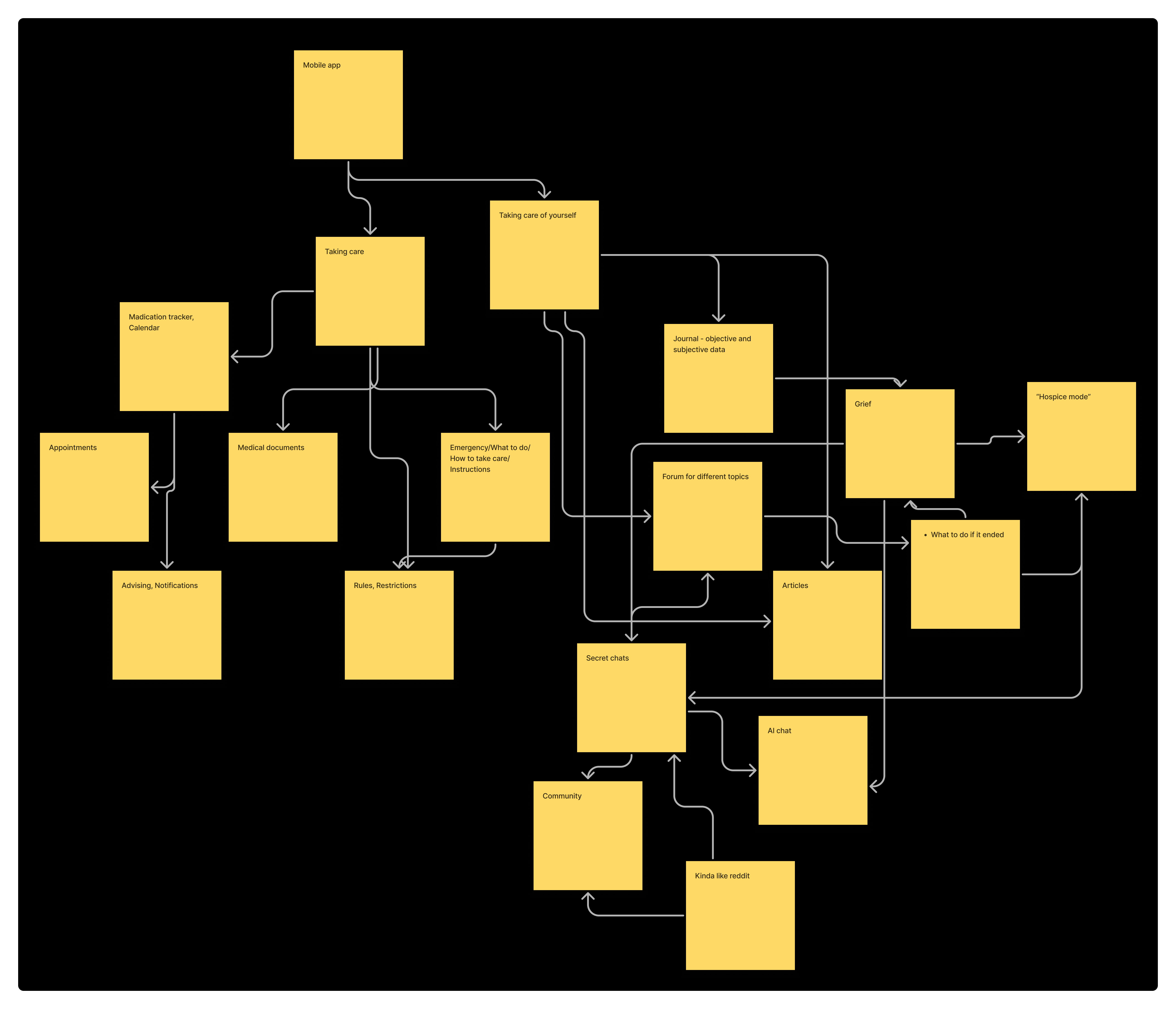
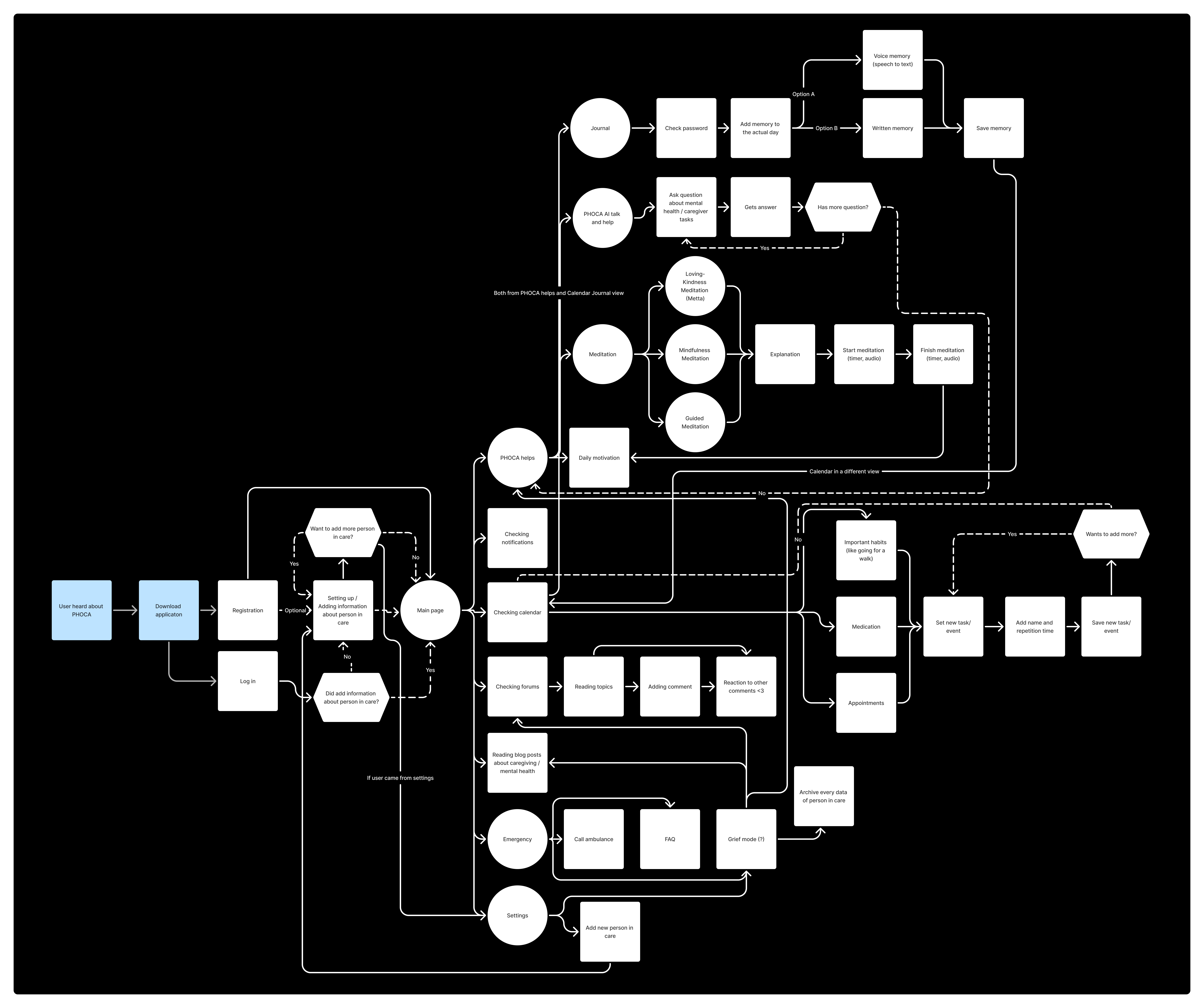
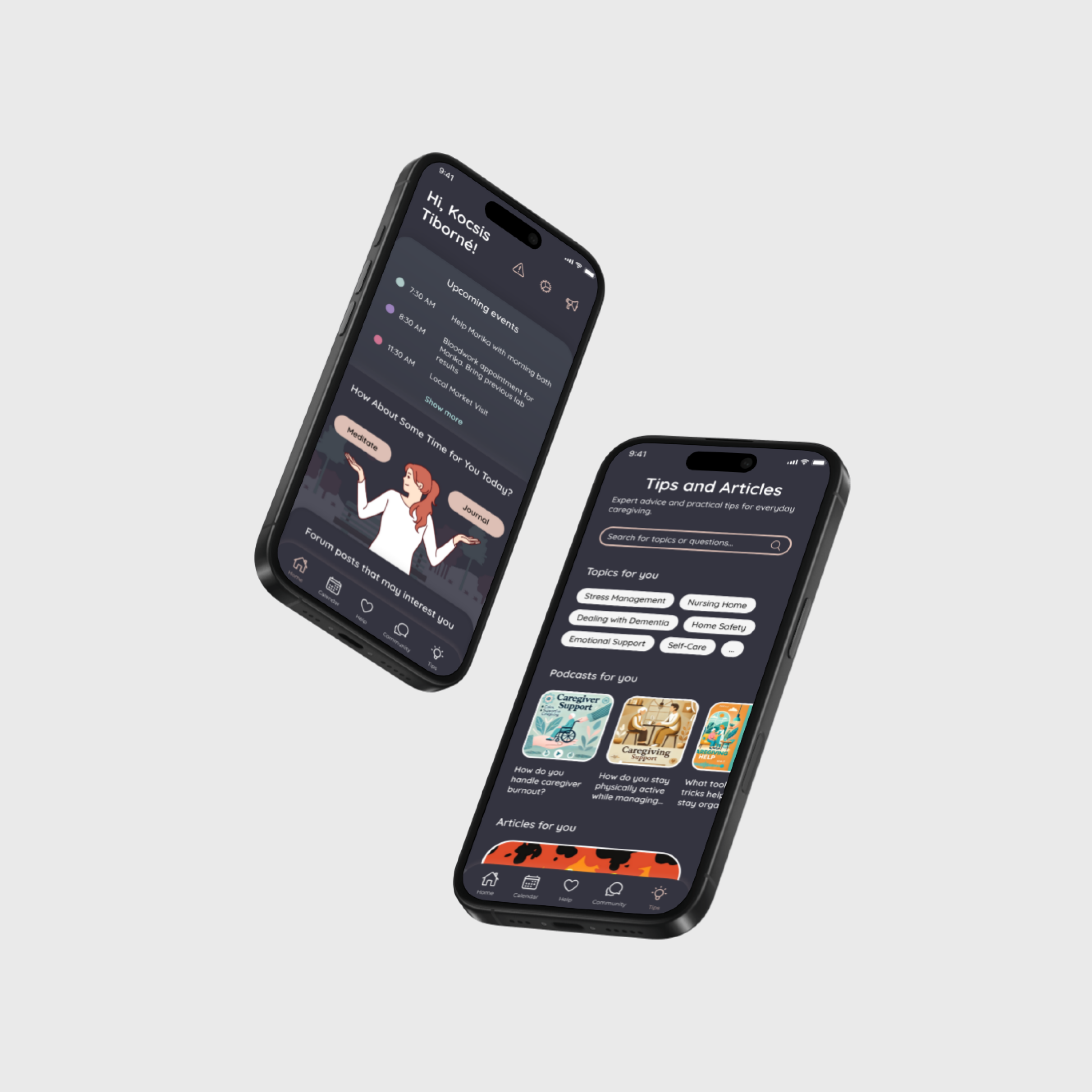
Before diving into wireframing and prototyping, I had to narrow it down to an actual concept of features and functions, which were the following:
Solution helping in these problems:
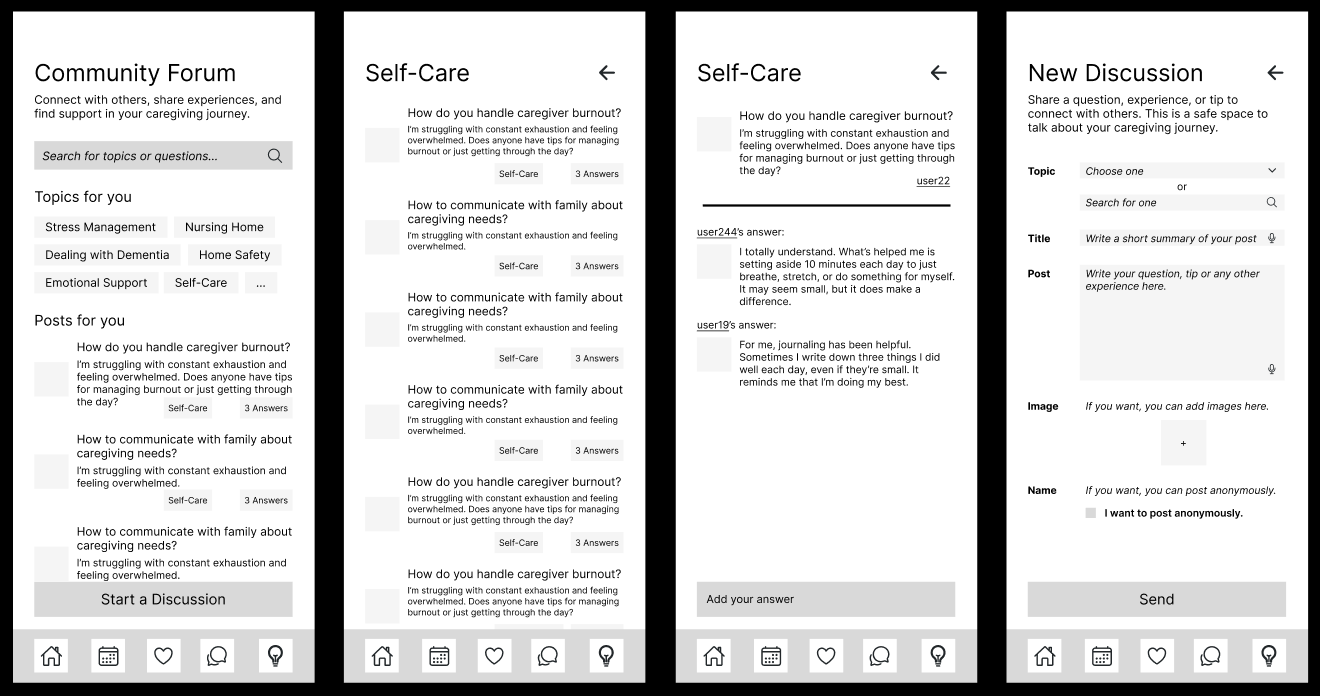
- Community forum.
- Connect with other caregivers for support and sharing.
- AI Support & Articles & Podcasts.
- Personalized mental health advice and content from professionals.
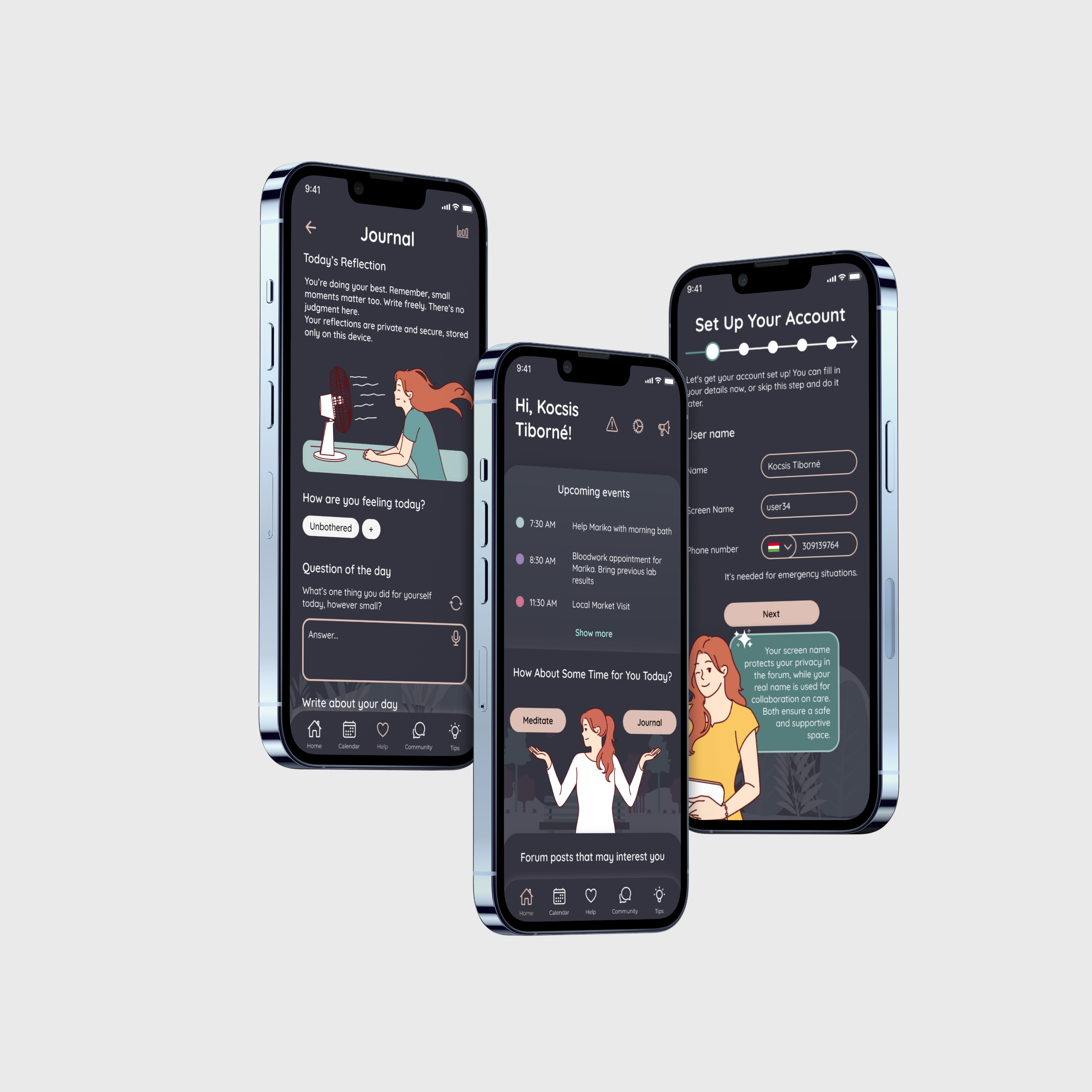
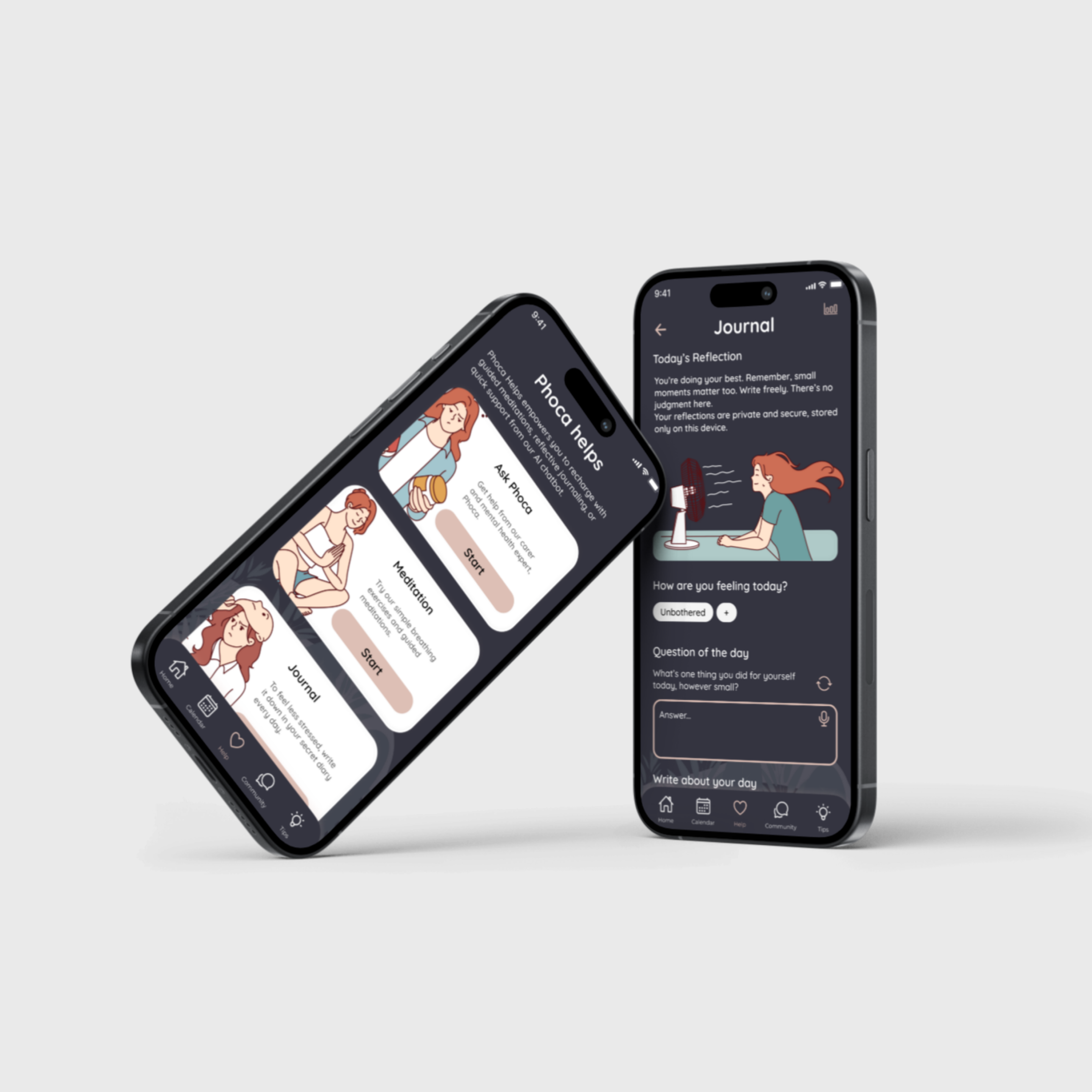
- Meditation & Journaling.
- Space for emotional expression and mindfulness.
- Tracks general mood and alerts when outside help is needed.
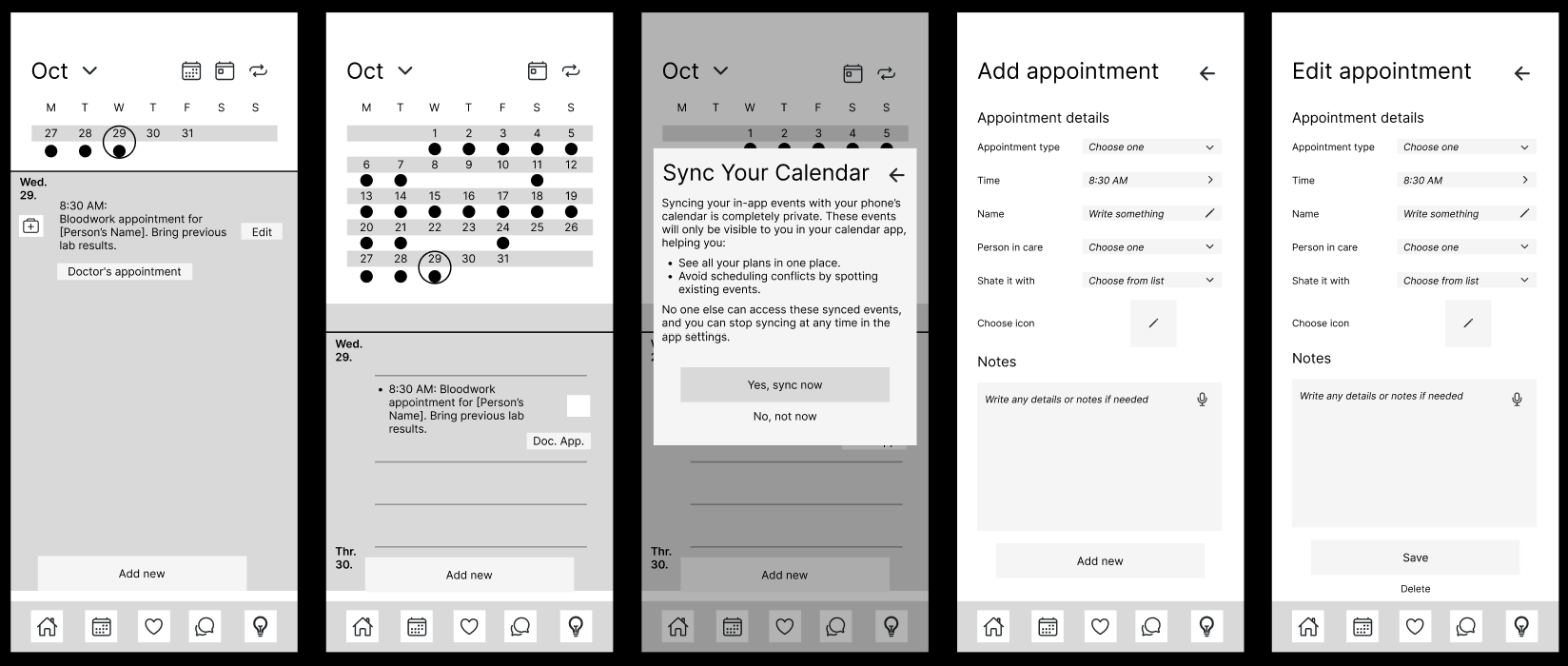
- Calendar to track medications, appointments, and caregiving tasks.
- Data can be shared with other carers (family and friends).
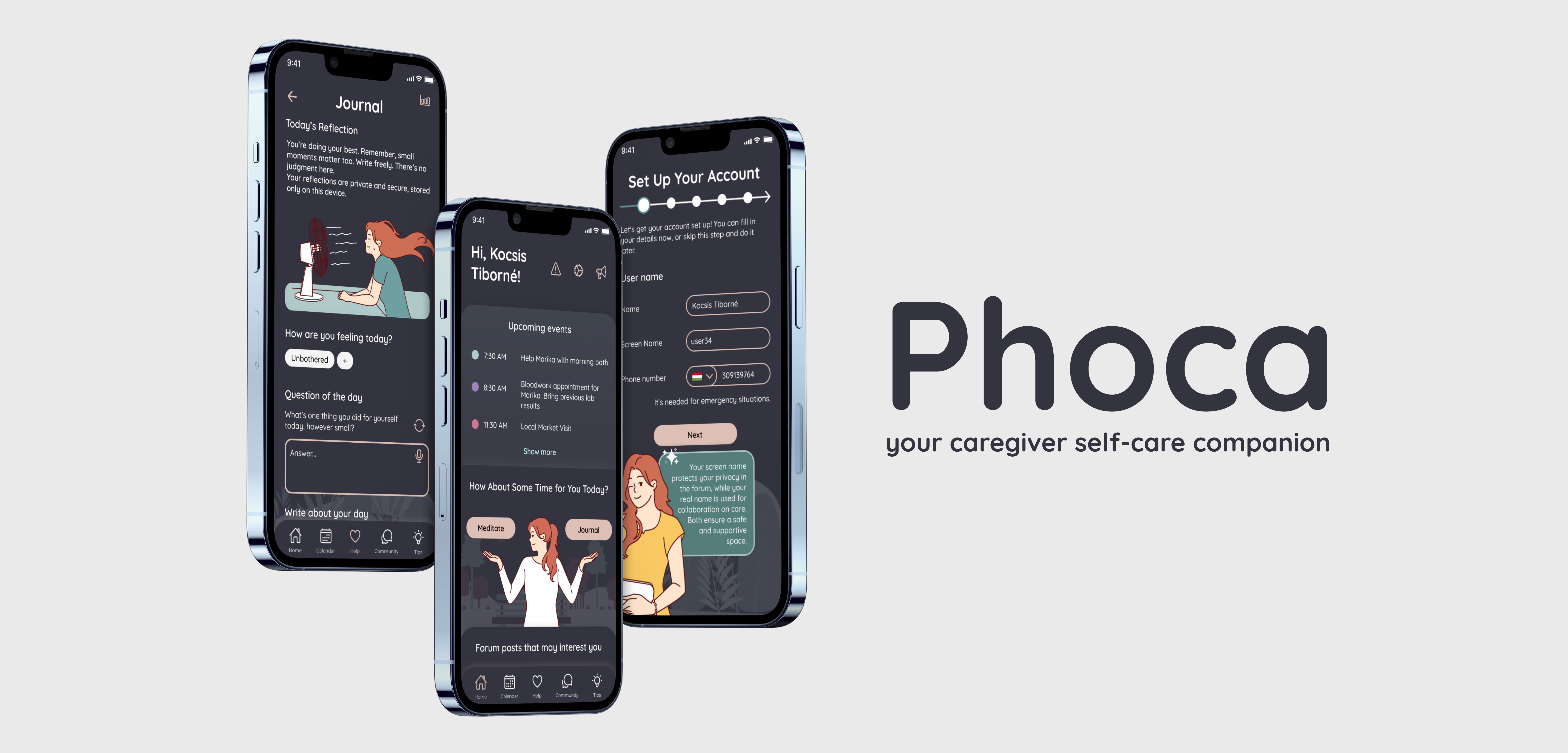
“Why the name "Phoca"? It means seal in Latin. Inspired by the Paro therapeutic robot. You can't look at a baby seal without feeling warmth and joy in your heart.”